Notes on acoustic songwriting
The small-room show, written down
Twenty minutes, forty chairs, no monitor and no crew. The review writes down how that show is built, and checks its numbers where numbers exist.
No. 1Volume one · five rooms, ten notes, sources at the foot of the page
The register
Every note, dated
One line per note, the most recent first. Entries the desk reads elsewhere travel in the same list and carry the name of their publication.
-
· The scene
Who books a listening room in a town of 140,000
Who holds the diary of a small room, what each of the four optimises, and what a city's hundred-night pool means for the act asking for a date. The message that gets answered, in its five parts.
-
· The instrument
Carrying a show on instruments that fit in two bags
A small-room set travels on two bags: one holds the instrument, the other holds everything else and has to close. The desk sets out the test that decides each object, what the house can be asked for, and what the unpacking costs the slot.
-
· The room
The house that lets the last song stay quiet
An inventory of everything in a small venue that makes a sound during the last song, who can switch it off, and what it costs to ask.
-

· The set
Why the first song is never the loudest
Three numbers are unknown at the first note and known by the third song: absorption, noise floor, carry to the back row. This note works all three, and places the loudest song where the room can carry it.
-

· The writing
Writing for the back of the room
The listener on the last chair is not a quieter version of the one at the front; they hear a different show. This note works the distance arithmetic, runs a two-pass test for lost words, and rewrites a line so its sense arrives.
-

· The room
What a low ceiling does to a ballad
Two back rooms with the same floor and a different ceiling are two different instruments. Here is the arithmetic, worked through, with the point where it stops being trustworthy.
-
· The set
What a twenty minute set actually holds
A twenty minute slot is 1200 seconds, and what fits inside it can be counted before the night. The desk works the walk, the songs and the gaps, and prices every minute of talking.
-
· The scene
How the small room circuit holds a season
How many quiet nights can one city hold? The desk works the answer from one counted figure, four assumptions you can replace, and a share nobody knows until it is counted.
-
· The writing
The four line verse that carries a whole song
What the folk ballad's four line stanza offers a small room: eight and six syllables, one rhyme per verse, short lines that leave a breath. The note takes the form apart, line by line, and times three verses.
-
· The instrument
The melodica in a quiet room
The melodica is a keyboard you blow: the note begins with the air and ends with it. This note works out what that does to a held chord, to the breath the front row hears, and to the attack a low ceiling returns twice.
01-05
The five rooms of the review
Five rooms in the same house, from the shape of a set to the way a small circuit holds a season.
-
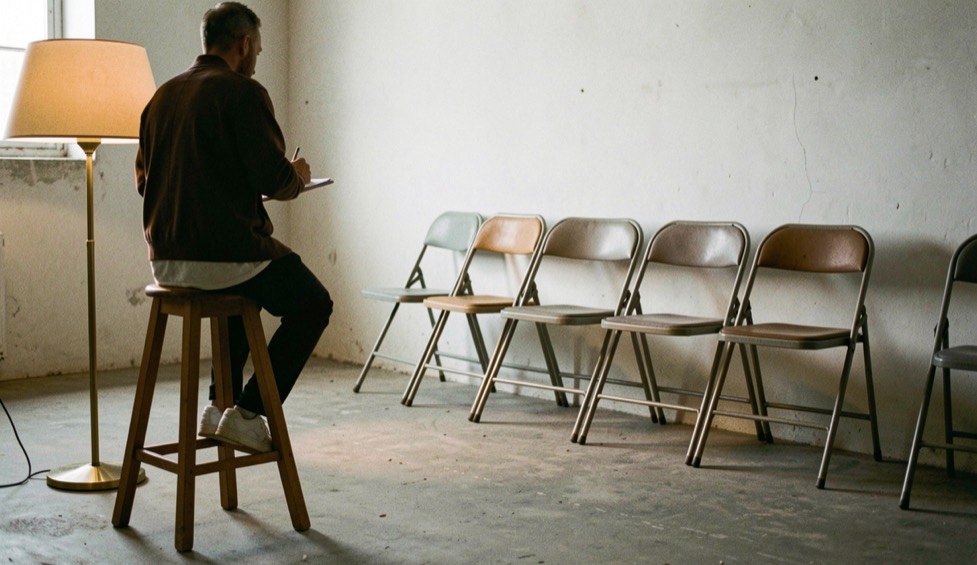
01
The set
The time budget of a short slot, the order of the songs, and what the first three minutes are for.
-
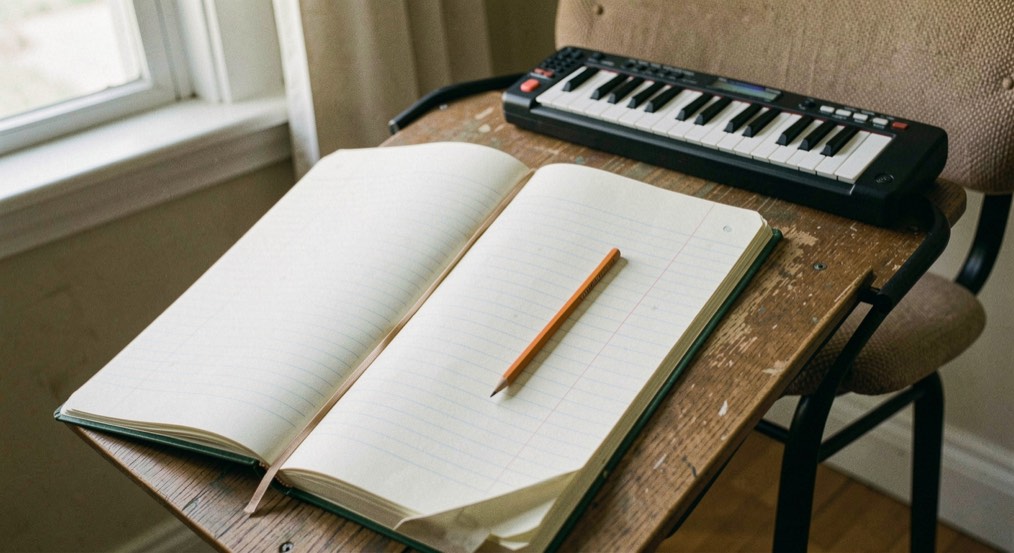
02
The writing
The four line verse as a working unit, and the plain test of whether the words reach the back row.
-

03
The instrument
What a melodica actually is, and how a whole show fits into two bags without losing anything that matters.
-
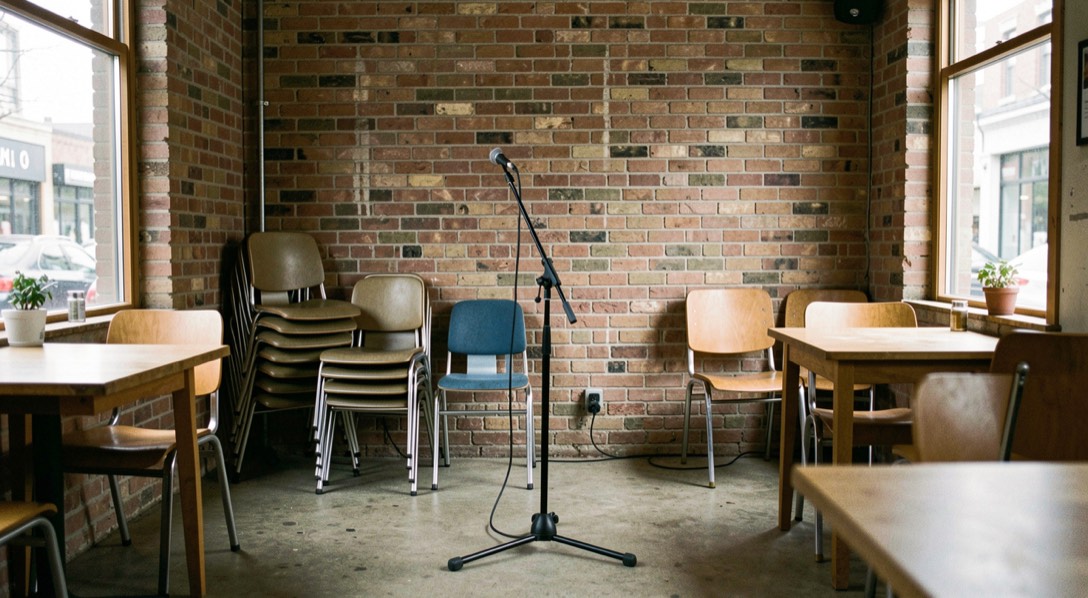
04
The room
One equation, a worked estimate, and the part of a quiet ending that belongs to the house rather than the performer.
-

05
The scene
The arithmetic of a season, and the four people who might be holding the diary of a listening room.
What the desk keeps up to date
Four pages read again more often than the others, because a room changes or a season fills up.
-
· Room 01
The set: how a small-room show is built
How a short acoustic set is built: the time budget of a twenty minute slot, the order of the songs, and what the first number is really for.
-
· Room 03
The instrument: the melodica and the small kit
A blown, keyed free reed instrument and the rest of a show that fits in two bags: what each object is for and what it costs to carry.
-
· Room 05
The scene: the small-room circuit, documented
How a small circuit holds a season, who actually books a listening room, and the arithmetic of an audience in a city of 139,804 people.
-
· The room
What a low ceiling does to a ballad
Two back rooms with the same floor and a different ceiling are two different instruments. Here is the arithmetic, worked through, with the point where it stops being trustworthy.
The review describes the small-room show and nothing else: what the desk accepts and refuses is written in the editorial policy, the desk itself sits on the about page, and a question travels through the contact page.